
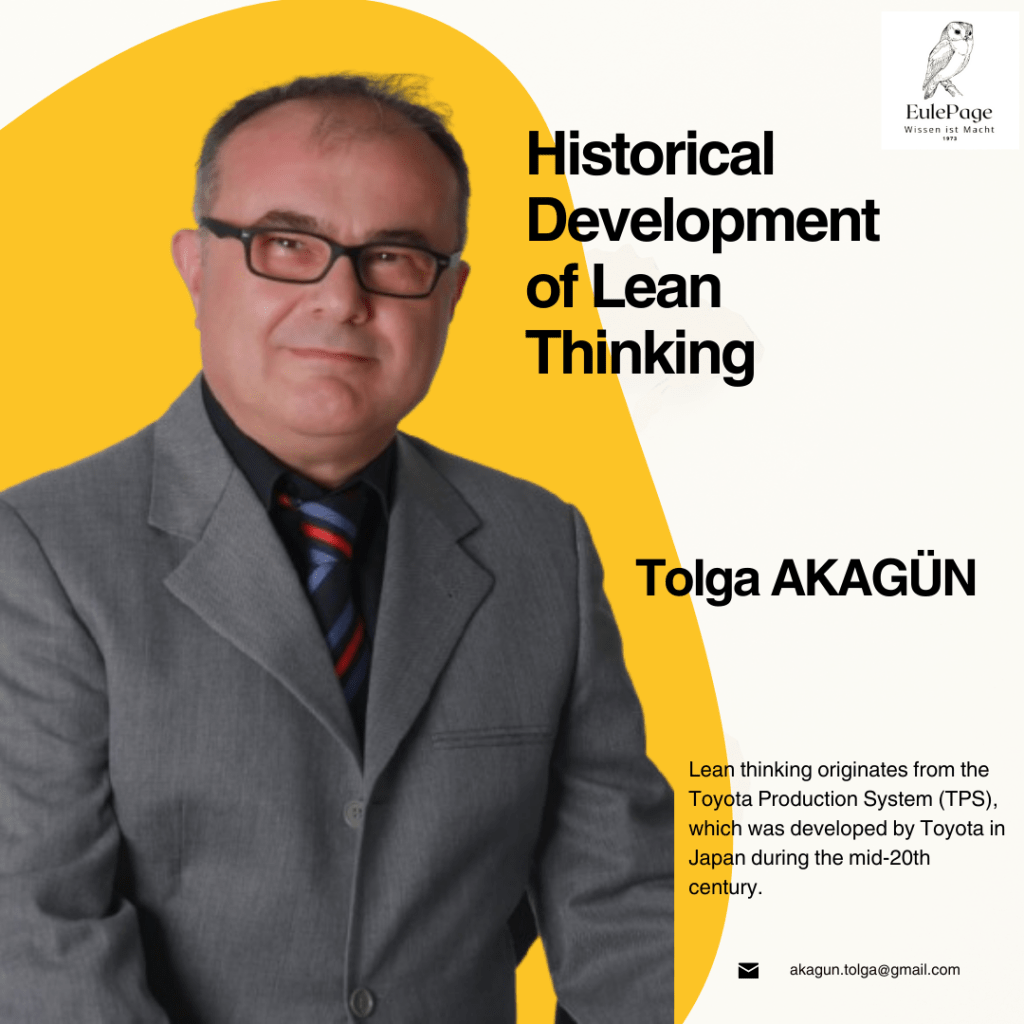
The Historical Development of Lean Thinking
Lean thinking has its roots in the Toyota Production System (TPS), which was developed by Toyota in Japan during the mid-20th century. Toyota introduced this system to reduce costs, enhance efficiency, and respond more effectively to customer needs in automotive manufacturing. Over time, the methods Toyota employed to minimize waste in processes became known as “lean thinking” and gained worldwide recognition. During the 1980s and 1990s, the works of James P. Womack and Daniel T. Jones helped expand lean thinking beyond the manufacturing sector to include service industries as well.
Lean Thinking and Waste Reduction
Lean thinking focuses on optimizing value streams by identifying and eliminating non-value-adding steps in processes. It aims to minimize various types of waste, such as excessive inventory, waiting times, unnecessary transportation, and over-processing. This approach has become a widely adopted method to increase efficiency, reduce costs, and enhance customer satisfaction across all industries.
Applications of Lean Thinking in the Tourism Industry
Lean thinking is also applied in the tourism industry to improve customer experience and streamline operational processes. Its application areas in the tourism sector include:
- Hotel Management: Operational tasks, such as check-in and check-out processes, can be accelerated using lean principles to enhance customer satisfaction. Removing unnecessary steps in room cleaning and maintenance processes reduces costs and improves guests’ overall experience.
- Food and Beverage Services: Lean practices in restaurants and cafes, such as optimizing order-taking, preparation, and service stages, help reduce customer waiting times and prevent food waste. Efficient placement of ingredients and the adoption of standardized portion sizes ensure optimal resource utilization.
- Tour and Guiding Services: Lean thinking in tour planning can optimize routes and minimize waiting times. This improves customer experience and ensures smoother, more satisfying service.
- Event Management: For large events like conferences and trade fairs, lean principles ensure orderly execution, enhance resource utilization, and increase participant satisfaction while reducing costs.
Through these applications, tourism businesses can achieve cost advantages while improving customer satisfaction. Lean thinking has become a fundamental principle for delivering customer-focused services and utilizing resources efficiently.
Identifying the Value Stream
In tourism, identifying the value stream involves defining all steps and processes that contribute to customer satisfaction. By applying lean principles, tourism businesses can focus on value-adding activities that directly enhance the customer experience while minimizing non-value-adding steps.
For instance, key steps in a hotel’s value stream may include reservation, check-in, room service, dining, and check-out. Actions that deliver speed, comfort, and satisfaction to customers create value, whereas steps causing delays or unnecessary paperwork represent waste that can be optimized using lean thinking.
Identifying and Reducing Types of Waste
Identifying and eliminating waste in tourism businesses improves customer experience while enhancing resource efficiency. According to lean thinking, waste can be categorized as follows:
- Waiting Times: Long waiting periods negatively affect customer satisfaction. Processes like check-in and food service can be streamlined to minimize delays.
- Unnecessary Transportation: Excessive movement of equipment and materials leads to time loss. Strategic placement of equipment can prevent this type of waste.
- Excess Inventory: Overstocking in hotels or restaurants incurs additional costs and risks of spoilage. Managing inventory based on actual needs reduces this waste.
- Unnecessary Movements: Redundant actions performed by employees during their tasks cause time inefficiencies. Optimizing workflows can mitigate such waste.
Examples of Lean Thinking Applications in Tourism
Lean thinking practices in tourism are employed to enhance efficiency across areas such as hotel management, food and beverage services, and tour guiding:
- Hotel Management: Hotels apply lean principles to processes like check-in/check-out, room cleaning, and energy management to improve guest experiences. Digital check-in options and smart energy management systems reduce waiting times and waste, lowering operational costs.
- Food and Beverage Services: Digital ordering systems in restaurants streamline the order process and minimize food waste. Standardized portion sizes and effective inventory management ensure efficient use of resources.
- Tour and Guiding Services: Effective tour planning and route optimization enhance customer satisfaction. Reducing waiting times and utilizing resources efficiently create smoother services.
By adopting lean thinking, tourism businesses can enhance efficiency, save costs, and improve customer satisfaction. This approach not only increases competitive advantage but also delivers a more satisfying customer experience.
Conclusion
Lean thinking significantly contributes to tourism businesses by enabling them to provide customer-focused and efficient services. By eliminating unnecessary steps, businesses simplify processes, reduce costs, enhance operational efficiency, and improve customer satisfaction. Additionally, lean practices support environmental sustainability by promoting efficient resource utilization and reducing waste.
For example, digital check-in/check-out systems in hotels shorten waiting times, while faster room maintenance and cleaning processes ensure a more comfortable stay. Optimized ordering systems in restaurants prevent food waste and improve resource management, enhancing customer satisfaction. Similarly, route optimization and minimized delays in tour planning improve the quality of tourist experiences.
Such applications are essential for meeting customer expectations in the tourism sector and strengthening businesses’ ability to adapt to changing market conditions. The structural improvements brought by lean thinking offer not only short-term benefits but also the potential to establish more sustainable service models in the long term. Consequently, the tourism industry can respond more effectively to growing customer demands, fostering growth and innovation within the sector.
Overall, lean thinking helps tourism businesses achieve a competitive edge by reducing costs, improving efficiency, and prioritizing customer satisfaction. It enables businesses to use resources more effectively, fulfilling environmental responsibilities while delivering exceptional customer experiences.
Tolga AKAGÜN
 EulePage
Yorum yazabilmek için oturum açmalısınız.