
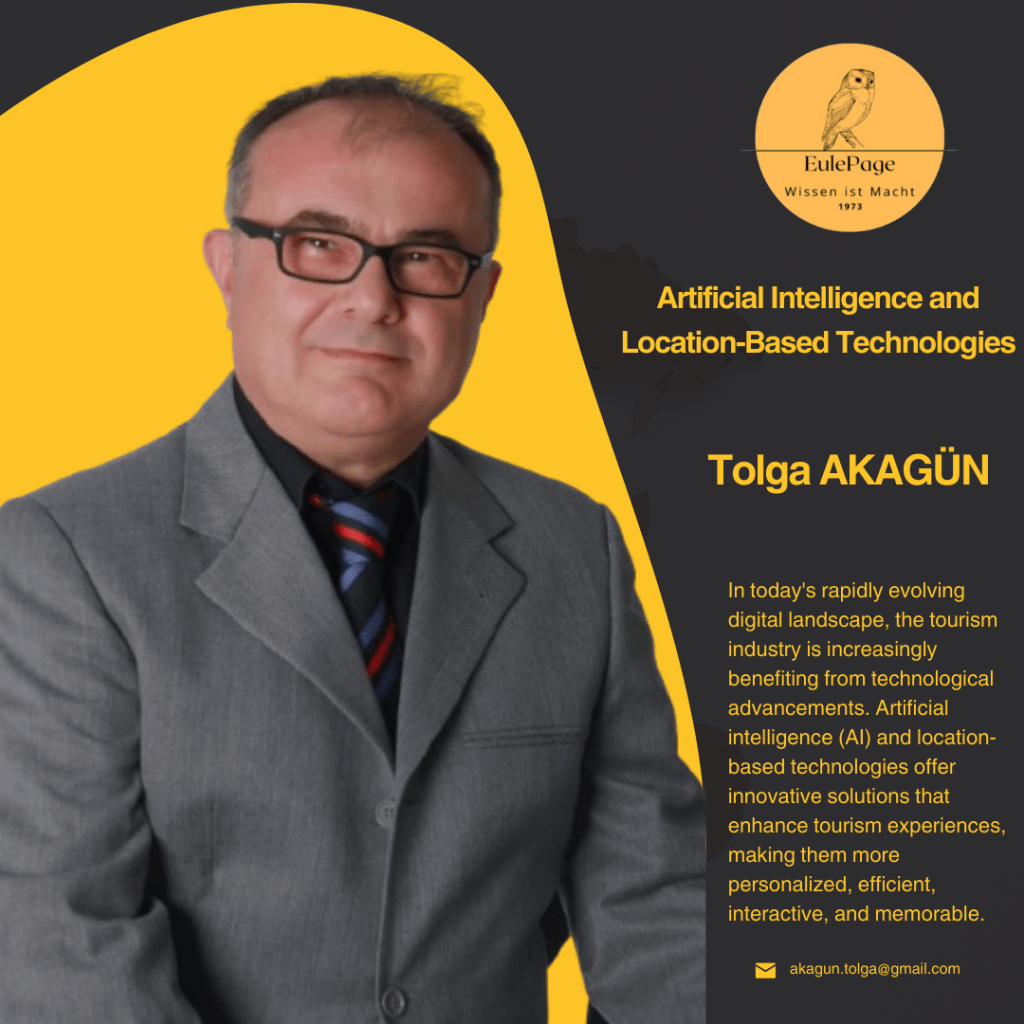
Artificial Intelligence and Location-Based Technologies: Smart Guidance Systems in Tourism
Introduction
In today’s rapidly evolving digital landscape, the tourism industry is increasingly benefiting from technological advancements. Artificial intelligence (AI) and location-based technologies offer innovative solutions that enhance tourism experiences, making them more personalized, efficient, interactive, and memorable. The integration of these technologies, particularly through smart guidance systems, enriches tourists’ exploration experiences by providing more convenient and tailored travel experiences. For countries with significant tourism potential, such as Turkey, these technologies present a substantial opportunity to enhance the sector’s competitiveness, sustainability, and visitor-friendliness.
The Role of Artificial Intelligence and Location-Based Technologies in Tourism
Artificial intelligence, with its capabilities in human-like reasoning, learning, and decision-making, contributes significantly to the tourism sector. By analyzing tourists’ past preferences, AI can suggest personalized routes, activities, and attractions. Meanwhile, location-based technologies (GPS, Wi-Fi, Bluetooth, etc.) facilitate dynamic guidance services based on real-time tourist locations. The combination of these technologies enables the development of smart guidance systems that provide tourists with real-time, accurate, and personalized information.
Turkey, a country rich in historical and natural attractions, has begun leveraging these technologies to enhance tourist experiences. Smart guidance systems contribute to a more informed, efficient, and comfortable travel experience for visitors.
Smart Guidance Systems
Smart guidance systems are digital platforms that make tourists’ journeys more interactive, efficient, and personalized. Through the integration of AI and location-based technologies, tourists can instantly access information about their surroundings and receive recommendations tailored to their preferences. In Turkey, such systems have been implemented across various destinations, offering visitors unforgettable experiences.
Key Features of Smart Guidance Systems
- Personalized Recommendations: AI analyzes tourists’ past choices, travel history, and interactions to provide tailored suggestions. For instance, while exploring Istanbul, AI-powered systems can recommend museums or art galleries within the historic peninsula based on the visitor’s interests.
- Real-Time Information and Navigation: Location-based systems offer real-time information about nearby tourist attractions, restaurants, and events. For example, a tourist in Cappadocia looking for a hot air balloon tour can receive instant updates on available operators and pricing.
- Multilingual Support: Smart guidance systems in Turkey provide services in multiple languages, helping tourists overcome language barriers. For example, a Chinese visitor in the Grand Bazaar can receive guided information in Chinese automatically.
- Voice-Guided Assistance and Interaction: Tourists can explore Turkey’s historical and cultural sites with hands-free voice-guided assistance. For instance, in Ephesus, a voice-guided system can provide detailed insights into ancient structures, enhancing the depth of the experience.
- Data-Driven Navigation: Location-based technologies suggest the most efficient and least crowded routes for tourists. During peak seasons, these systems can direct visitors to lesser-known yet equally fascinating sites, ensuring a more balanced distribution of tourist traffic.
Applications of AI and Location-Based Technologies in Turkey
Turkey has rapidly embraced digital transformation in tourism, effectively utilizing these technologies. Prominent destinations such as Istanbul, Cappadocia, and Antalya have adopted smart guidance systems to provide visitors with enhanced experiences.
Smart Guidance Systems in Istanbul
Istanbul, with its rich historical and cultural heritage, offers a unique tourism experience through digital technologies. Smartphone applications provide tourists with location-based guidance, helping them navigate from Sultanahmet Square to Topkapı Palace or Hagia Sophia with ease. Additionally, these apps offer personalized recommendations for museums, restaurants, and shopping venues based on user preferences.
Cappadocia’s Digital Transformation
Famous for its unique rock formations and hot air balloon tours, Cappadocia benefits significantly from smart guidance systems. These systems provide real-time information on balloon tour schedules, routes, and prices. Additionally, digital versions of local guided tours offer tourists in-depth insights into the region’s history, enhancing their travel experience.
Tourism Technologies in Antalya and the Aegean Region
Popular holiday destinations such as Antalya are also adopting AI and location-based technologies. Tourists can seamlessly navigate between beaches and cultural heritage sites with digital guidance. In the Aegean region, smart guidance applications introduce visitors to local cuisines, traditional festivals, and historical landmarks, offering a rich cultural experience.
Evaluation and Implications
The impact of AI and location-based technologies in tourism extends beyond merely facilitating travel; these innovations also contribute significantly to the sustainability of destinations. Particularly in heavily visited areas, these technologies help manage tourist flows more efficiently. Smart guidance systems not only direct visitors to major attractions but also promote lesser-known yet remarkable sites, ensuring a more balanced development of local economies and alleviating congestion in popular areas.
As seen in Turkey’s examples, destinations integrating smart guidance systems provide tourists with richer, more efficient, and unforgettable experiences. However, for these technologies to be effectively utilized, it is crucial for tourists to adopt digital infrastructures and for local businesses to integrate with these systems. Moreover, in an increasingly digitalized world, accurately representing local culture and traditions on digital platforms remains a key consideration.
Conclusion
The convergence of artificial intelligence and location-based technologies is revolutionizing the tourism industry. In countries with high tourism potential, such as Turkey, smart guidance systems powered by these technologies enhance visitor experiences by offering real-time information and personalized recommendations. These systems not only make travel more enjoyable but also contribute to the sustainability of tourist destinations. The examples in Turkey illustrate the growing significance of these technologies in tourism and suggest that more destinations will adopt digital tools for promotion in the future. As the tourism sector continues to evolve with AI-driven digitalization, tourists will enjoy more interactive and enriched experiences, and Turkey will remain at the forefront of this transformation.
Tolga AKAGÜN
 EulePage
Yorum yazabilmek için oturum açmalısınız.